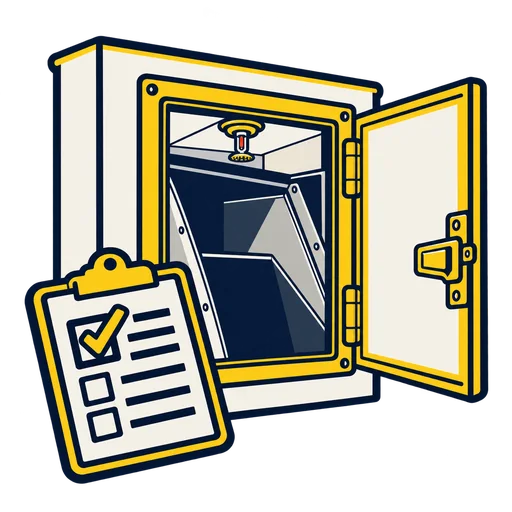
Why it’s part of every job

We’re already on every floor and inside the chute, so we look while we work. Owners and managing agents are responsible for keeping chute doors and fire protection in working order, and our notes give your team and your contractors a head start.

We clean; we don’t repair or certify. If something needs fixing, you’ll know exactly where and what, with a photo.

What the NYC rules say

NYC’s Buildings rule 1 RCNY §24-01 requires approved self-closing hoppers on chute openings, with hopper doors rated for at least one hour of fire resistance. Refuse room doors must be self-closing and rated at least 1½ hours, and the rule says it is unlawful to keep them open. Chutes and refuse rooms must be kept clean, sanitary and free of vermin and odors, and owners must keep records of pest treatment.

Sprinklers matter too: the New York State Fire Code calls for heads at the top of trash and linen chutes and in the room at the bottom, and the National Fire Protection Association standard for chutes (NFPA 82) covers chute systems nationally. Your engineer or code consultant is the right person to say exactly what applies to your building. Our report gives them a head start.
FAQ

Chute safety check: common questions

Do trash chute doors have to be self-closing in NYC?

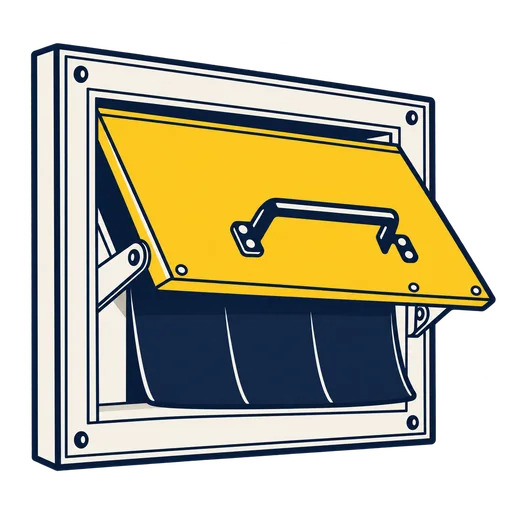
Yes. NYC’s Buildings rule 1 RCNY §24-01 requires chute openings to have approved self-closing hoppers that close off the chute while trash is loaded, with hopper doors rated for at least one hour of fire resistance. A door that sticks open or won’t latch defeats that protection.

Source: NYC Buildings rule 1 RCNY §24-01

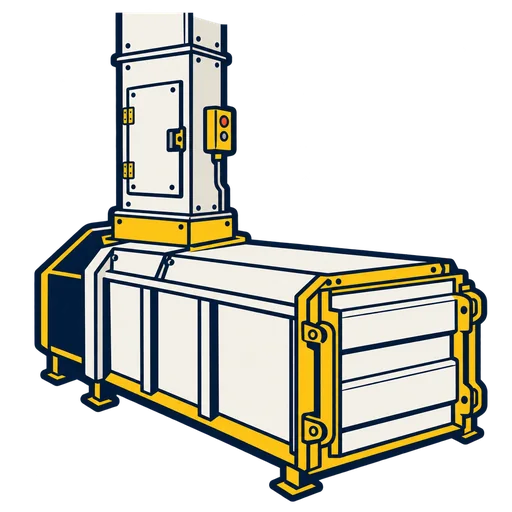
Can the compactor room door be propped open?

No. NYC’s chute rule requires refuse room doors to be fireproof and self-closing, rated at least 1½ hours, and says it is unlawful to keep them open. Propping the door for convenience defeats the room’s fire separation.

Source: NYC Buildings rule 1 RCNY §24-01

Are trash chutes required to have sprinklers?

Generally, yes. The New York State Fire Code calls for sprinklers at the top of rubbish and linen chutes and in their terminal rooms, plus alternate floors where a chute runs through three or more floors, and NYC’s chute rule requires sprinklers in the refuse room. Your engineer can confirm what applies to your building.

Source: NY Department of State code interpretation 2011-02

Do you check the chute’s fire safety parts?

We check the parts we work around on every job: intake doors that should close and latch on their own, and sprinkler heads in the chute that should be clear and undamaged. It’s a condition report, not a code inspection. We clean, we don’t repair, so anything that needs fixing gets photographed and reported to you.

Do NYC owners have to keep records for their trash chutes?

Yes, for pest treatment. Under 1 RCNY §24-01 the owner must treat the chute, refuse room and related parts as often as needed to prevent insects and rodents, and keep a record of those treatments available for the Department of Buildings. Dated cleaning reports belong in the same file.

Source: NYC Buildings rule 1 RCNY §24-01

Call and Marshall picks up.

Tell him the address, the floors and what’s going on with the chute. You’ll get a straight answer and a quote for your building.